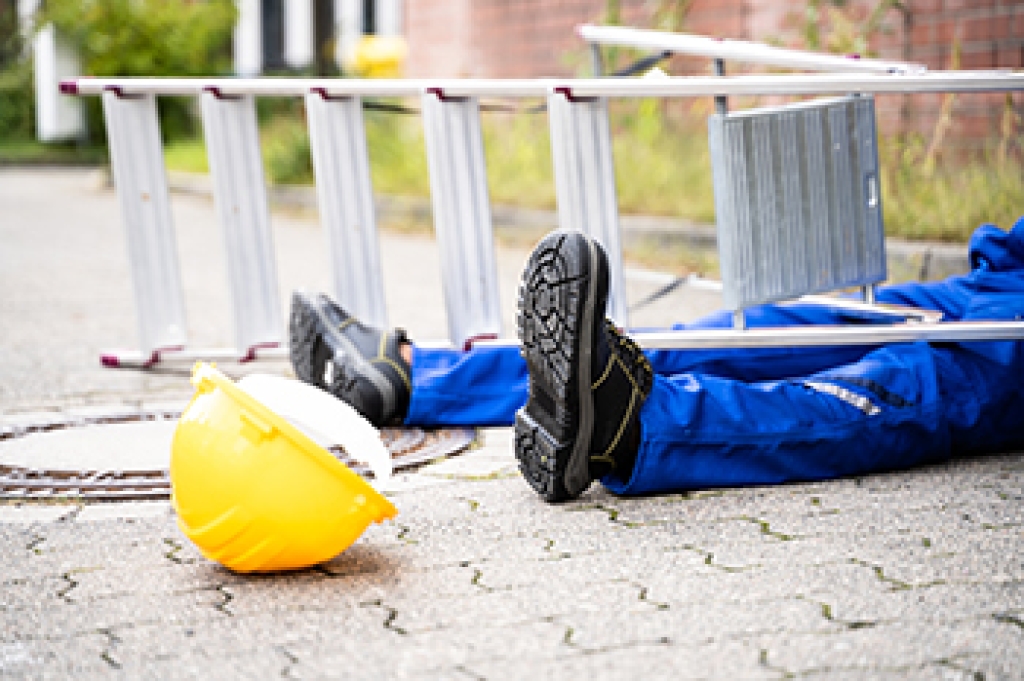
Workplace falls occur when employees lose their balance or slip while performing job-related tasks, sometimes resulting in serious foot and ankle injuries. These accidents can happen in construction, warehouses, and other work environments where surfaces or equipment create hazards. Common causes include slippery floors, unsafe ladders, and unprotected edges. Symptoms after a fall may include ankle pain, swelling, or difficulty walking. Some injuries become noticeable only after the initial shock wears off. Risk factors include working at heights, carrying heavy materials, and rushing through tasks. Understanding how workplace falls happen help employers and employees recognize hazards and take practical steps to improve safety.
Falls from heights occur when workers lack proper fall protection or when guardrails are missing or incorrectly installed. Without suitable protective systems, a person working near an elevated edge may lose balance and fall. Improper ladder use is another common cause, especially when ladders are damaged, placed on uneven ground, or used at the wrong angle. Workers may also fall when they overreach instead of repositioning a ladder. Slippery conditions caused by water, oil, dust, or loose materials can make walking surfaces dangerous. Poor lighting and cluttered walkways may hide these hazards, increasing the chance of an unexpected fall. Regular workplace inspections and safe work practices help reduce these risks.
Certain workplace conditions make falls more likely, particularly when employees work under time pressure or lack proper safety training. Inadequate footwear reduce traction, while carrying bulky equipment may interfere with balance and visibility. Workers who perform tasks on elevated platforms or frequently climb ladders may face additional risks. Preventing falls requires keeping walkways clear, cleaning spills promptly, and selecting footwear with suitable slip-resistant soles. Workers should maintain secure contact while climbing and avoid stretching beyond the ladder rails. These precautions help create a safer workplace.
When a workplace fall causes foot or ankle pain, prompt evaluation helps identify the extent of the injury. A podiatrist examines swelling, skin damage, and joint movement. Depending on the findings, treatment may include wound care, protective bracing, or referral for surgical evaluation. Following weight-bearing instructions and attending follow-up appointments can support healing. Severe pain, visible deformity, or an inability to walk requires urgent medical attention. If you develop foot or ankle pain after falling at work, it is suggested that you consult a podiatrist for an accurate diagnosis and appropriate treatment.
Preventing falls among the elderly is very important. If you are older and have fallen or fear that you are prone to falling, consult with one of our podiatrists from Westside Podiatry Center, LLP. Our doctors will assess your condition and provide you with quality advice and care.
Every 11 seconds, an elderly American is being treated in an emergency room for a fall related injury. Falls are the leading cause of head and hip injuries for those 65 and older. Due to decreases in strength, balance, senses, and lack of awareness, elderly persons are very susceptible to falling. Thankfully, there are a number of things older persons can do to prevent falls.
How to Prevent Falls
Some effective methods that older persons can do to prevent falls include:
- Enrolling in strength and balance exercise program to increase balance and strength
- Periodically having your sight and hearing checked
- Discuss any medications you have with a doctor to see if it increases the risk of falling
- Clearing the house of falling hazards and installing devices like grab bars and railings
- Utilizing a walker or cane
- Wearing shoes that provide good support and cushioning
- Talking to family members about falling and increasing awareness
Falling can be a traumatic and embarrassing experience for elderly persons; this can make them less willing to leave the house, and less willing to talk to someone about their fears of falling. Doing such things, however, will increase the likelihood of tripping or losing one’s balance. Knowing the causes of falling and how to prevent them is the best way to mitigate the risk of serious injury.
If you have any questions, please feel free to contact one of our offices located in Liverpool, Camillus, Skaneateles, Oswego, and Cicero, NY . We offer the newest diagnostic and treatment technologies for all your foot care needs.