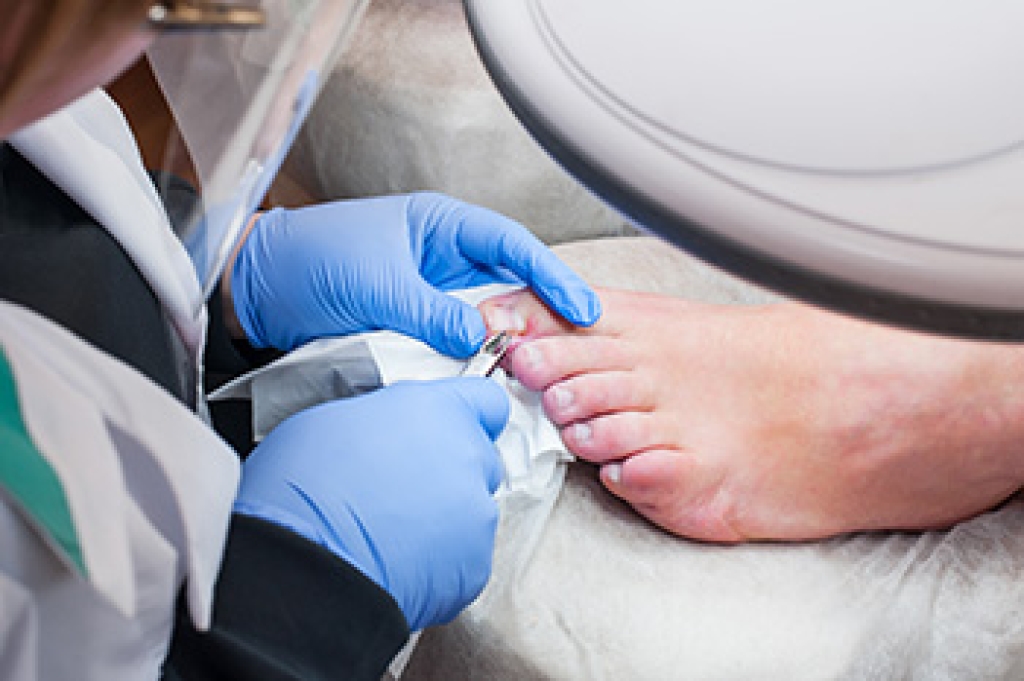
Ingrown toenail surgery is often recommended when an ingrown nail becomes painful or infected. Symptoms usually include swelling, drainage, and overgrown skin along the nail edge. The toe may look inflamed or shiny and can feel sore at first, then progress to sharp pain, throbbing, or tenderness that makes wearing shoes difficult. Causes include repeated improper nail trimming, tight footwear, and genetic factors that cause the nail to curve into the skin. A podiatrist can help from the start by examining the toe, confirming the diagnosis, and determining whether infection or deeper tissue involvement is present. Early care may include conservative treatment, but when symptoms persist, a minor in-office surgical procedure can safely remove the ingrown portion of the nail. Treatment then moves into proper wound care, infection prevention, and long-term solutions to reduce recurrence. If you have a painful ingrown toenail, it is suggested that you make an appointment with a podiatrist.
Ingrown toenails may initially present themselves as a minor discomfort, but they may progress into an infection in the skin without proper treatment. For more information about ingrown toenails, contact one of our podiatrists of Westside Podiatry Center, LLP. Our doctors can provide the care you need to keep you pain-free and on your feet.
Ingrown Toenails
Ingrown toenails are caused when the corner or side of a toenail grows into the soft flesh surrounding it. They often result in redness, swelling, pain, and in some cases, infection. This condition typically affects the big toe and may recur if it is not treated properly.
Causes
- Improper toenail trimming
- Genetics
- Improper shoe fitting
- Injury from pedicures or nail picking
- Abnormal gait
- Poor hygiene
You are more likely to develop an ingrown toenail if you are obese, have diabetes, arthritis, or have any fungal infection in your nails. Additionally, people who have foot or toe deformities are at a higher risk of developing an ingrown toenail.
Symptoms
Some symptoms of ingrown toenails are redness, swelling, and pain. In rare cases, there may be a yellowish drainage coming from the nail.
Treatment
Ignoring an ingrown toenail can have serious complications. Infections of the nail border can progress to a deeper soft-tissue infection, which can then turn into a bone infection. You should always speak with your podiatrist if you suspect you have an ingrown toenail, especially if you have diabetes or poor circulation.
If you have any questions, please feel free to contact one of our offices located in Liverpool, Camillus, Skaneateles, Oswego, and Cicero, NY . We offer the newest diagnostic and treatment technologies for all your foot care needs.
